I have always believed that invention is how the world moves forward.
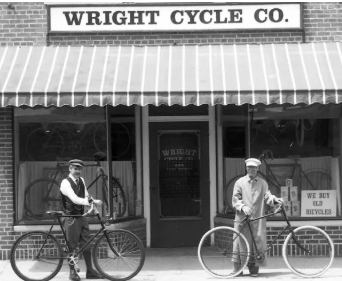
I grew up near the Wright Brothers house. Two people in a bicycle shop solved a problem that had stumped everyone else. That idea got into me early and never left.
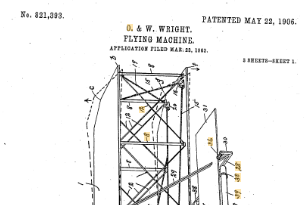
In 2014 I started CareBand. My father is a geriatrician, and I watched him describe patients with dementia who wandered. Families had no way to know where they were. So I built a fix: a long-range radio wearable that tracked location without requiring WiFi, cellular, or a smartphone. The novel part was the constraint itself: people living with dementia don't carry smartphones when they wander. Every existing solution assumed they would. We solved for the person, not the phone. The first prototype was soldered by hand on my dorm room desk. We filed patents, because that is what you do when you build something real.
What I didn't expect was the mentorship. Over a decade of building, I worked alongside patent attorneys and technical advisors who taught me how IP actually works: prosecution strategy, claim construction, how scope gets narrowed during an office action. Most inventors never get those conversations.
One of our 2018 filings accumulated over 500 forward citations from companies building in our space. I found out years later. No tool was watching for it. The mentorship gave me the framework. The tools didn't exist.
Every tool I found was built for enterprise clients or IP experts. Nothing for the rest of us.
When you own patents and want to use them, you hit a wall fast. The tools that exist (Docket Navigator, Lex Machina, Anaqua) are built for BigLaw and Fortune 500 IP departments managing thousands of patents. They assume you already know what prosecution history means. They assume you have a team.
If you're a founder, an in-house counsel at a smaller company, or someone who just got their first patent grant and is trying to figure out what you actually own, those tools don't speak your language. And most free tools are just search. Prior art finders, docketing reminders, citation lookups. None of them answer: what does this cover, who is building in that space, and what should I do about it?
"The gap between knowing nothing about IP and being an expert at a top company is enormous. I lived on the wrong side of that gap for years. Most inventors still do."
I surveyed 873 open-source patent repositories on GitHub. The pattern held everywhere. No no-code interfaces. No patent-to-product linkage. No tools built for the person who owns the patent. Only for the engineers building the data pipelines that feed the enterprise platforms. The small inventor, the first-time founder, the in-house counsel without a dedicated IP team. Nobody built anything for them.
Patent strategy in minutes. Not a search engine. Not a chatbot.
PatentSignal reads the full patent: claims, prosecution history, citations. It builds a deep profile of what you own.
This is not a replacement for a patent attorney. It is what helps you walk into that meeting prepared. It helps the attorney move faster. It helps the founder understand what they own before deciding whether to license, enforce, or sell. It helps investors trust what they are backing. Because when you can explain your IP clearly, you are not just an inventor. You are someone who understands the asset.
An invention that sits in a drawer because its owner didn't know what they had is a failure of infrastructure, not imagination. PatentSignal is the infrastructure.